I wanted to check the handling of absentee ballots on the Dominion 5.5 Democracy Suite. While the system more than ever seems to be a cumbersome dud on the face of it, I found at least three things which cause great concern. You may download the manual at the link below. The absentee/mail in portion begins on page 239. Bear in mind the difference in absentee and in person ballots seems to be only the lack of a qr code on the absentee ballot.
Directions instruct absentee ballots to be checked for any staples folds or creases that could jam them in the scanner. It also says grease or marks. So if a mechanic or other hard working person unknowingly has something on their hands that makes a mark it could kick their ballot out for adjudication or simply hide it so it does not get counted. Adjudication hiding has also been found on in person ballots. Instructions say to unfold absentee ballots and fold them the other way to flatten them. More folding possibly making a mark that will kick them to adjudication or hiding.
Also noted is to take care that scan codes do not get placed in the vote areas. Dominion can’t even guarantee the system will put its own information somewhere other than what should be the very purpose of it. This amounts to another means by which ballots can be sent to adjudication or hiding or cast a vote other than the voter intended.
Not the least of the concerns is after scanning a batch the batch has to be accepted or rejected. Pollwatchers can not be close enough to see what key was pressed. Adjudication is supposed to have teams of two but I know of no safeguards for scanning. At least now a ballot could have company going to wherever it is that rejected batches go. How is anyone to know if the batch was rejected and subsequently rescanned or not?
An election is just a spreadsheet. It needs ro put votes for each candidate in a column per race and total the votes for each by candidate by contest to declare a winner or necessity of a runoff. This is what hand counting would do without any of the risks named above.
I am sure there are other problems as well. Dominion Voting systems are about half hatched. There is a legal requirement called fitness of merchantability that something has to be fit for what it was purchased to do. Per Legal Information Institute fitness of merchantability is “The implied warranty of merchantability, defined in U.C.C. § 2-314, is an automatic legal guarantee that goods sold by a merchant are fit for their ordinary purpose, safe, and of reasonable quality.” Clearly Dominion causes more problems than it solves. Our legislature and leaders have ignored this and kept throwing good money after bad to keep from providing what they by oath and law are required to provide and respond to our pleas.
In summary I still believe voting absentee is the way to avoid the qr code. All the Dominion shortcomings and more follow to in person ballots but with absentee voting you can keep a copy and know you voted directly and not via a qr code. Below is also the elections calendar which should advise when you can start requesting an absentee ballot for the primary and general and the last day to request. The last day to request an absentee ballot is 11 days prior to the election and to be counted they need to be received by the time the polls close on election day. I recommend hand delivering your absentee ballot to your elections office in person. If you want to feel like you went to the poll deliver it on election day but bear in mind the sooner you return your voted ballot the sooner nobody can vote in your name fraudulently.
I woke up this morning feeling that I do not live in a free country anymore. My gut says this is not right and I have learned to trust my gut. Elections are currently convoluded I believe on purpose.
The confidential certification process of verifying electronic voting being the only means of verification is a good place for the deep state to live and breath. That system invalidates every tenet of elections. Everything in voting depends on the certification. And everything else depends on voting. . `No right is more precious in a free country than that of having a voice in the election of those who make the laws under which, as good citizens, we must live. Other rights, even the most basic, are illusory if the right to vote is undermined.’ Reynolds v. Sims, 377 U.S. 533 (1964)
Logic and accuracy testing does not require a voting on the machines plan so the “results” of l&a testing without a documented voting plan can not determine if the machines counted correctly. L & A testing does not find timed or algorithm software that may take place during an election.
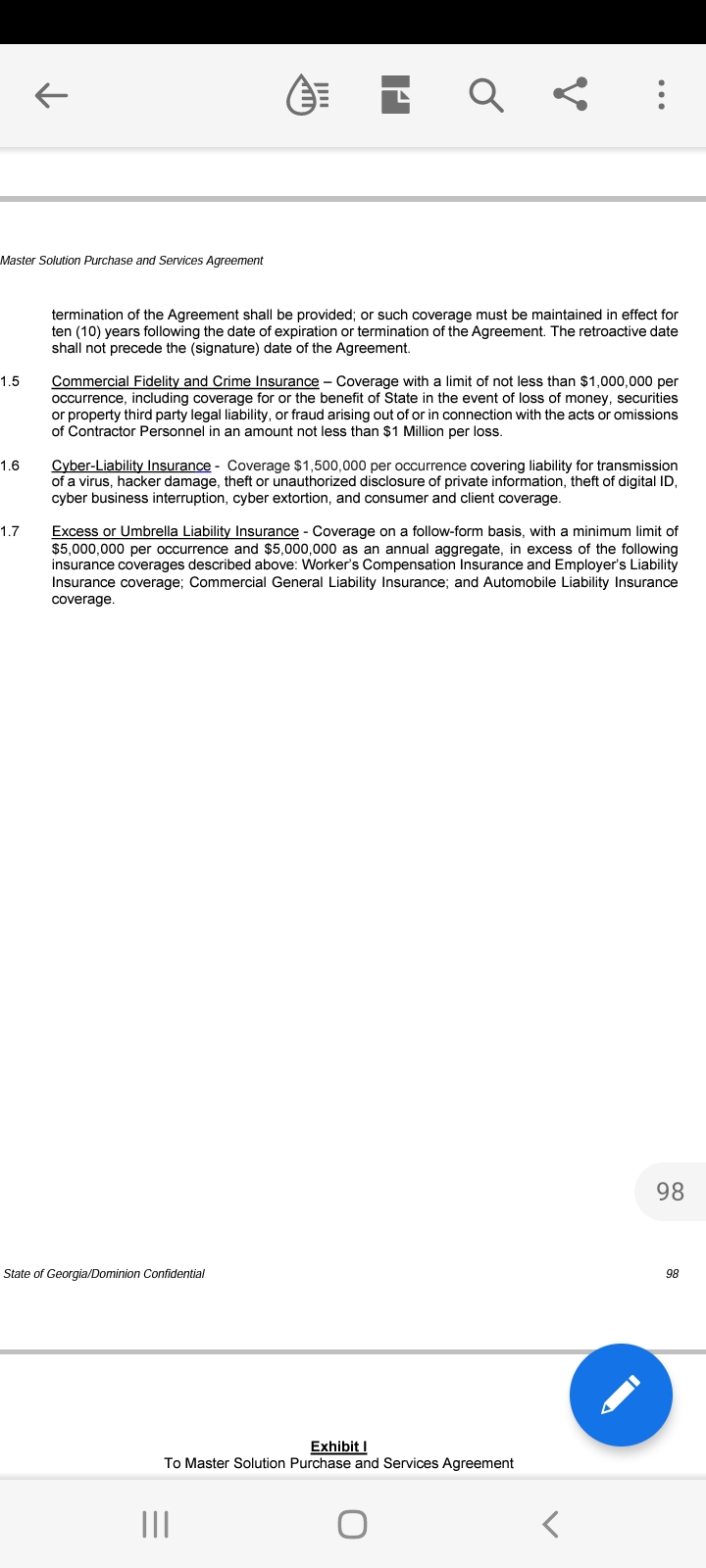
Dominion is supposed to maintain $1.5 million cyber security insurance per cyber incident (p 98 of the contract) and report and mitigate cyber incidents. orr for the record of cyber incidents revealed that no record is maintained of the incidents. Any cyber incident and even the risk of a cyber incident undermines any certification and opens the security to whatever a hacker wants to do.
Depending on denied hand counts does not produce security. Even though O.C.G.A. 21-2- 379.22 (8) requires for ballot marking devices to count every vote as cast, without verification of every vote the voting system and directors have usurped the power of the legislature and rewritten law. The current system as operated is thus changed to “whose vote is not worthy to be checked for accuracy,” violating equal protection.
Ordinary voters have the right to have software checked and secure. If scanners can tally absentee ballots not done on bmd’s then they dont need the qr code. So why code a vote to be walked less than 100 feet to be uncoded with the printed vote visible and known to the voter? It does not make sense.
Clearly delayed correction of the voting system is a covert plan to provide only insecure unverifiable elections which ultimately depend on denied hand counts and voters checking their ballots.
Those who are old enough can remember when school report cards graded not only classes but conduct and behaviour. Sometimes the notation would be “could be better.”
Considering the history of the candidates for PSC, they have earned themselves a could be better. They are not newbies to the job and yet the PSC does not even require telephone companies to submit their prices for public posting to the PSC so customers can compare rates. Utility costs are staggering. Do not condone the could be better by voting for it. If no other options are available that you wish to vote for select write in and write in “none of the above.”
The Candidates of concern:
PSC ELECTION
Terrell Fitz Johnson is a public official, businessman, and military veteran from Georgia. Here’s a summary of key information about him based on available data: Background and Education: Born on October 9, 1963, Johnson is a graduate of The Citadel (B.S. in Education, 1985), where he attended on a wrestling scholarship and won the NCAA Southern Conference title as a freshman in 1982. A knee injury ended his wrestling career, but he was inducted into the Georgia Chapter of the National Wrestling Hall of Fame in 2021. He also holds a Master’s in Education from Troy University (1991) and a J.D. from the University of Kentucky College of Law (1998).
Military Service: Johnson served in the U.S. Army for 21 years (1981–2002), enlisting in 1981, becoming a commissioned officer in 1985, and retiring as a Major.
Business Career: He owned and operated Eagle Group International (1998–2008), a $175 million company providing logistics, IT, training, and healthcare services to the U.S. Department of Defense, later acquired by Lockheed Martin. He also served as CEO of ASID Group International. In 2024, Johnson, his wife Suzann Wilcox, and business partners opened Drafty Dane Park & Pint, an off-leash dog park and bar in Marietta, Georgia.
Public Service: Appointed by Governor Brian Kemp in July 2021 to the Georgia Public Service Commission (PSC) for District 3 (covering Fulton, DeKalb, Clayton, and Rockdale counties), Johnson became the first Black Republican and second African American to serve on the PSC. He was sworn in on August 26, 2021, replacing Chuck Eaton. Johnson chaired the PSC’s Telecommunications Committee until September 2023 and now chairs the Energy Committee. In 2023, the National Association of Regulatory Utility Commissioners appointed him chair of the Task Force on Evolving Gas Infrastructure Planning.
Political Involvement: Johnson ran unsuccessfully for Cobb County Commission in 2020 and Georgia State School Superintendent in 2014. He won the Republican primary for PSC District 3 in May 2022, but the general election was canceled due to a federal court ruling on the Voting Rights Act, which challenged the at-large election system for PSC commissioners. The legal case remains unresolved, and Johnson’s term, which expired on December 31, 2022, continues until an election is held. He is running in a special Republican primary for PSC District 3 on June 17, 2025.
Community Involvement: Johnson is active in his community, serving on boards such as the Life University Board of Trustees, Wellstar Health System’s CAPTIV Board (Chair), Kennesaw State University Foundation, Cumberland Counseling Center, and the State Charter Schools Commission. He is a member of the Cobb County Chamber of Commerce and Cumberland Community Church. A sports enthusiast, he owned the Atlanta Beat women’s soccer team (2008–2011) and has coached community football, soccer, and wrestling for over a decade.
Personal Life: Johnson is married to Suzann Wilcox, and they have four children and five grandchildren. He recently moved from Cobb County to Fulton County.
Recognition: In 2021, he received the Outstanding American award from the National Wrestling Hall of Fame and Museum.
Johnson’s career reflects a blend of military service, business leadership, and public service, with a strong focus on community engagement and energy policy in Georgia.
____________ Tim Echols is a Republican incumbent running for re-election to the Georgia Public Service Commission (PSC) District 2 seat in a special election, with the Republican primary scheduled for June 17, 2025, and the general election on November 4, 2025. He has served as a PSC commissioner since January 2011, representing District 2, which spans eastern central Georgia, and currently holds the position of vice-chairman. Echols is campaigning for his third term, emphasizing his commitment to clean energy, technology, and innovative policies to make Georgia a leader in these areas. Background and Career Early Life and Education: Born November 1, 1960, in Clayton County, Georgia, Echols grew up in a family that operated a car auction, dairy farm, and house-moving business. He attended the University of Georgia, earning a B.A. in English and two master’s degrees (in mass communication and nonprofit organization). He met his wife, Windy Davis, at UGA, and they married around 1982. They have seven children and live in Hoschton, outside Athens. Professional Experience: Before his PSC tenure, Echols worked in various roles, including at Beaudry Ford in Atlanta and as a staff member with Student Venture, focusing on high school evangelism. In 1994, he founded TeenPact, a national nonprofit that provides citizenship training for teens, now operating in 49 states. He also served on Governor Sonny Perdue’s Office of Children and Families for five years, was treasurer and spokesperson for U.S. Representative Paul Broun, and managed John Oxendine’s 2009 gubernatorial campaign. PSC Tenure: Elected in 2010 after defeating Democratic candidate Keith Moffett, Echols won re-election in 2016 against Libertarian Eric Hoskins. His 2022 re-election was postponed due to a federal court ruling that the PSC’s at-large election system violated the Voting Rights Act, though this was later overturned, leading to the 2025 special election. Policy Positions and Achievements Clean Energy Advocacy: Echols has championed solar energy, helping Georgia rise from 34th to 4th in national solar production by 2024, with over 2,400 megawatts of solar capacity installed. He supports net metering, allowing solar panel owners to sell excess energy back to the grid, and led a 2019 initiative to donate a solar pavilion to the Hog Hammock Foundation on Sapelo Island. He also promotes electric vehicles, advocating for expanded tax incentives. Energy Regulation: As a PSC commissioner, Echols regulates utilities like Georgia Power, focusing on keeping electric rates low and supporting renewable energy development. He has supported Georgia Power’s grid reinvestment and natural gas system upgrades but opposed a 2008 bill (SB31) allowing Georgia Power to charge customers for nuclear plant construction costs before completion. He backs the privatization of nuclear projects, like Plant Vogtle, and has expressed concerns about nuclear waste storage, advocating for reprocessing. Other Issues: Echols supports fracking and has opposed EPA coal regulations. He has also been active in fighting human sex trafficking, creating the “Unholy Tour” to educate policymakers and the Wilberforce Fellowship to raise awareness. Campaign and Controversies His campaign highlights his record on clean energy, affordability initiatives for seniors and low-income customers, and fostering a business-friendly climate to attract jobs. He emphasizes Georgia’s competitiveness in industries like electric vehicle manufacturing (e.g., Hyundai and Rivian). Controversies: 2011 Masters Ticket Incident: Echols used PSC letterhead to request Masters Golf Tournament practice round tickets, claiming it was to inspect limousines. He later admitted this was improper. 2018 Ethics Complaint: The Energy and Policy Institute filed a complaint alleging Echols violated Georgia’s Open Records Act by deleting text messages potentially related to Georgia Power discussions before a Plant Vogtle vote. Critics have accused him of being too close to Georgia Power. 2022 Redistricting Dispute: Echols was accused of colluding with Commissioner Tricia Pridemore to redraw PSC district lines, excluding Gwinnett County to disqualify Democratic challenger Patty Durand. Durand sued Echols for blocking her on social media, alleging First Amendment violations. Echols agreed in 2023 to unblock critics and refrain from deleting critical comments. Campaign Finance: Since 2017, 74% of Echols’ itemized campaign contributions ($216,095) have come from entities with ties to PSC-regulated utilities or those seeking to influence PSC decisions, raising concerns about influence. Personal Life and Other Activities Echols hosts a weekly radio show, Energy Matters, on Cox Media Group, discussing energy issues. He is involved in community initiatives, such as the Clean Energy Roadshow, showcasing sustainable technologies. He and his wife, Windy, a Christian counseling graduate student, are active in their community, and Echols has cited his faith as a guiding factor in his career.
Election Dynamics: The 2025 PSC election is a low-profile race, expected to have lower turnout due to the absence of major races like governor or president. The PSC’s decisions on utility rates and energy policy, especially regarding Plant Vogtle’s cost overruns, are key voter issues. For more details, visit Echols’ campaign website (www.timechols.com) or the Georgia PSC website (psc.ga.gov).
_________
You can view how to do a write in vote on the current Georgia electronic voting system at this link.
In Georgia candidates for political office have several options.
Major party via party primary
Minor political body via party convention also may require petitions collected based on specified numbers and are subject to acceptance and validation by the office of the secretary of state.
Independent candidate requires petitions in the same manner as minor political bodies.
Write-in candidate no qualifying fee, no petitions. Requires notice published in a general circulation newspaper and declaration form. Other entities can file for a candidate which also requires a candidate permission form. The candidate name is not printed on the ballot and must be written in by the voter. Write-in votes are only counted for legally qualified candidates. Names of write-in candidates are supposed to be provided in each poll. You should ask to see the list when you are in the poll. Voters should contact a pollworker to find out where the list is. Voters may not use their phone in the poll booth so early check and writing down the official candidate name to take to vote with you is necessary. This can be bypassed by checking the Secretary of State MVP web site while voting absentee other than at the poll. If a list of qualified write in candidates will not be in with an absentee ballot. You can check the MVP web site for their qualified candidates or check with the election office.
The above candidate categories are subject to various qualifying deadlines, the last one being write-ins in September before the general election.
This is the Election Assistance Commission Write-in Voting document.
Just vote and count paper, please. Apparently effort is underway to “enhance” voting by a company that calls themselves Enhanced Voting. You would think after all the trouble Dominion has been and has caused the state would see the wisdom in Georgia being sovereign in their elections and not using any outside vendors. There is a Blue Ribbon Election Study Committee. They meet July 15. Details are in this file. I support removing elections from the Secretary of State to an election only commissioner. It would require a constitutional amendment but it is something we need to think about. I also support whoever is in charge of elections having to get permission to use any vendor.
I am have posted my rla audit report from the Walker runoff in 2022. I was there as a member of the public supposedly because Constitution Party and Libertarian Party had no candidates on the ballot. I believe this is a grevious error since all parties and the public have a vested interest in monitoring any handling of ballots. As a member of the public I was restricted to an observation area while party monitors and even a monitor from the Carter Center were able to move closer to the audit for more meaningful observation. The July 6 audit of the primary 2022 included additional ballots to be audited. To the best of my memory the more ballots that were audited the higher the error rate was. Having studied Title 21 for the last four years, I believe the intent of the legislature to be for meaningful observation throughout an election cycle.
The experts even the inventor of Risk Limiting Audits, Philip Stark, advise that RLA’S are not a good evaluation of accuracy. He particularly advises the Fulton count, recount and audits all vary. I have highlighted some of the most pertinent sections but the entire statement in the Curling Case is relative.
Mr. Stark gives some percentages regarding Fulton. The numbers most relevant are that for a bmd to be used in Georgia it must count every vote cast accurately by law which I have attached. If I remember correctly the error per cent allowed by HAVA the federal law is subject to FEC voting standards. “For testing purposes, the acceptable error rate is defined using two parameters: the desired error rate to be achieved, and the maximum error rate that should be accepted by the test process. For each processing function indicated above, the system shall achieve a target error rate of no more than one in 10,000,000 ballot positions, with a maximum acceptable error rate in the test process of one in 500,000 ballot positions.” https://www.fec.gov/resources/updates/agendas/2001/mtgdoc01-62/v1/v1s3.pdf. Clearly by both Georgia law and FEC standards render Dominion a product that does not meet the purpose for which it was purchased. Not only did Dominion sell a system that does not perform they have placed themselves in every election that generates more expense for the duped state. We should not have to keep incurring expense and effort to validate what Dominion fails to properly do.
Given that page 98 of the Georgia Dominion contract required $1.5 million cyber insurance per cyber incident we can determine that the Dominion system was always connected to the internet. An open records request response revealed that though the cyber incidents are supposed to be reported and mitigated by Dominion, the Secretary of State does not keep a record of cyber incidents. It was told me in 2022 that the Secretary of State has the password to Cherokee system. I would imagine this to be statewide. If it was up to me I would change the password and not let them have it. The poll pad info comes from the Secretary of State’s office though the SOS web site says the counties maintain voter data.
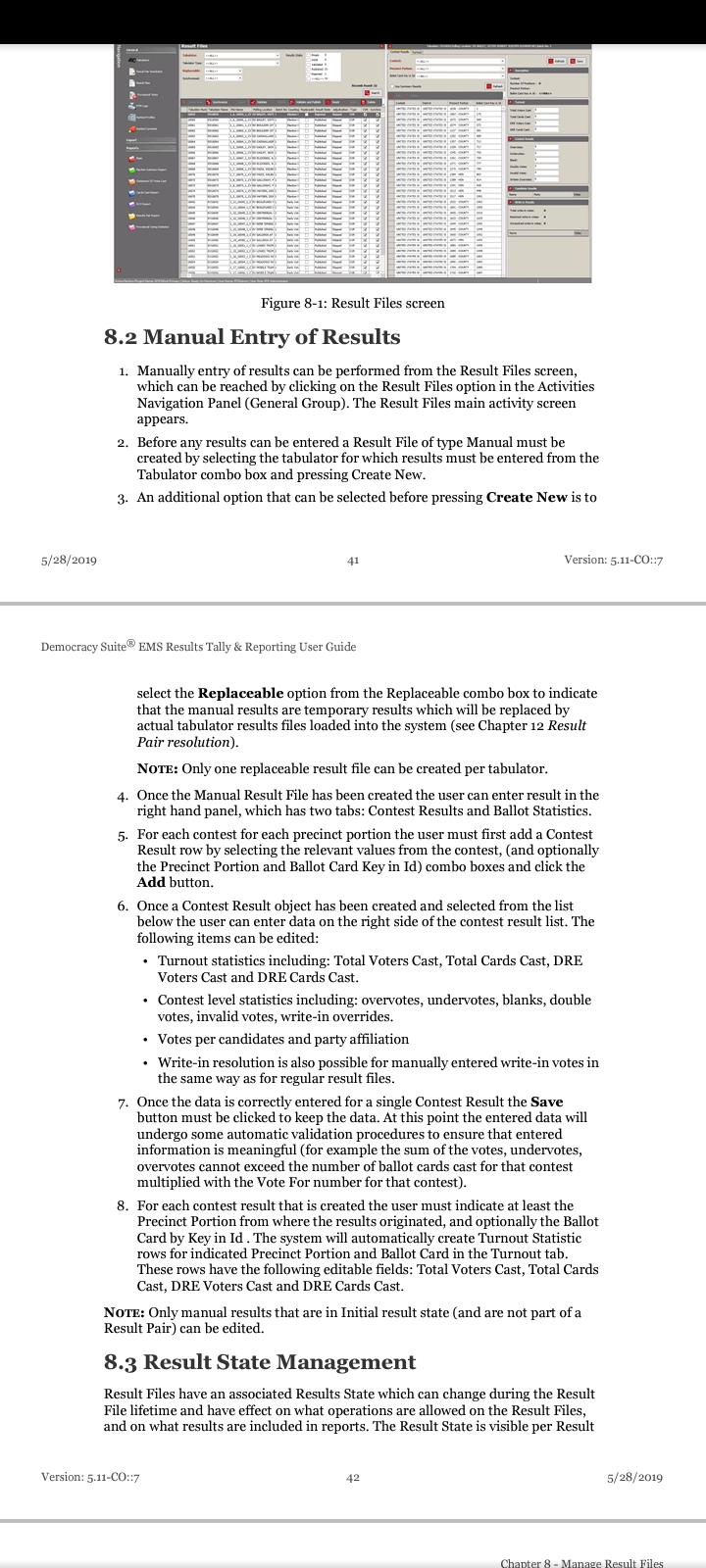
But dont sweat all that. I have not been able yet to observe how the tabulated ballots get into the election management system so I do not know if the scanner sends the info by bluetooth or something. I do know that according to the Dominion user manual totals can be entered in what amounts to a spread sheet manually with no requirement for a ballot. That would be subject to human vision and keying errors. One person in a county could throw an election.
Based on the foregoing it seems foolish to me to bypass the first opportunity to curtail the failures of Dominion by not counting the ballots at the first opportunity which would be the precinct as described in 21-2-437 and Rhoden v. Athens Clarke County. Sons of Confederate veterans et. al. states that citizens have the right to expect law to be followed and the right to sue to require it. Moving precinct problems to county location just makes a bigger problem and is the first step in removing the election from the voters. Wisdom would dictate to never make your battle bigger. Documents mentioned are posted.
Securing elections involves multiple layers of protection, from ensuring voter registration integrity to safeguarding the vote-counting process. Here are some steps Georgia can take to enhance election security:
1. **Enhancing Voter Registration Systems**: – **Regular Audits and Updates**: Conduct regular audits of voter rolls to remove deceased individuals and those who have moved out of state. Implement robust procedures for updating voter information. – **Cybersecurity Measures**: Employ advanced cybersecurity measures to protect voter registration databases from hacking attempts.
2. **Voting Equipment and Technology**: – **Paper Ballots**: Utilize paper ballots that provide a physical record of votes. This ensures that votes can be audited and recounted if necessary. – **Routine Testing**: Perform regular testing and certification of all voting machines and electronic systems to ensure they are functioning correctly and are free from tampering. – **Cybersecurity Protocols**: Implement strong cybersecurity protocols to protect voting machines from cyber attacks, including regular software updates and security patches.
3. **Poll Worker Training and Security**: – **Comprehensive Training**: Provide comprehensive training for poll workers on how to handle and report any suspicious activities or irregularities. – **Background Checks**: Conduct thorough background checks on all election officials and volunteers to ensure integrity and trustworthiness.
4. **Election Day Procedures**: – **Chain of Custody**: Maintain strict chain of custody procedures for ballots and voting equipment to prevent tampering and loss. – **Surveillance**: Use surveillance cameras in polling places and ballot storage areas to deter and detect any potential fraud or tampering.
5. **Post-Election Audits**: – **Risk-Limiting Audits**: Conduct risk-limiting audits after each election to compare a sample of paper ballots with the electronic results. This helps ensure the accuracy of the final count. – **Transparency**: Make audit procedures transparent and involve bipartisan observers to enhance public trust in the process.
6. **Public Information and Transparency**: – **Voter Education**: Provide clear and accurate information to the public about voting procedures, voter rights, and how to report suspicious activities. – **Transparency**: Ensure transparency in all aspects of the election process, including vote counting and reporting results.
7. **Collaboration with Federal Agencies**: – **DHS and CISA Collaboration**: Work with federal agencies like the Department of Homeland Security (DHS) and the Cybersecurity and Infrastructure Security Agency (CISA) to receive threat assessments, share information, and adopt best practices.
By implementing these measures, Georgia can enhance the security and integrity of its elections, ensuring that every vote is accurately counted and that the public maintains confidence in the electoral processes.

 GEORGIA4GEORGIA